
Maintenance, Service, and Beyond

WE'VE GOT YOUR BACK!

We provide a 24/7 emergency breakdown service Sydney-wide. For all emergencies call 1300 658 509.

Electrical

Reliable. Efficient. Built for Your Business.

Industrial Refrigeration Experts

Custom cooling solutions designed to support critical operations and long-term performance.

Refrigeration

From Concept to Completion, We've Got You Covered

Turnkey Projects with Multidisciplinary Expertise

We deliver turnkey projects that exceed expectations. Our team manages every aspect—from design and engineering to installation and commissioning.

Projects

Engineering

Innovative, tailored solutions. Cost-efficient designs. Multidisciplinary team

View more

Projects

Turnkey from start to finish. Seamless integration. Exceeding expectations

View more

Services

Comprehensive maintenance. Ongoing support. System upgrades

View more

For Emergency services

Call Us: 24/7

1300 658 509
or
Contact Now
24/7 Support

Service & Maintenance


Ensuring your systems run smoothly with comprehensive support and expert care. We offer round-the-clock emergency assistance, reliable repairs, and proactive maintenance to keep your operations uninterrupted

24/7 Support
01
Expert Repairs
02
Proactive Maintenance
03
Asset Tracking
04
100 %

Australian Owned

100 %

On time projects

Blog
Latest from TIESA Integrated Solutions

Recent Blog


The Future of Industrial Services: Why Clients Need Multi-Discipline Engineering Partners

Industrial service expectations are changing. Clients no longer need contractors who only arrive after something fails. They need partners who understand assets, data, energy, controls, compliance, safety and long-term reliability. Facilities are becoming more connected, energy costs are under scrutiny, refrigerants are changing, automation is spreading and production windows are tighter. The old model of isolated trade support is becoming less effective.

Read More
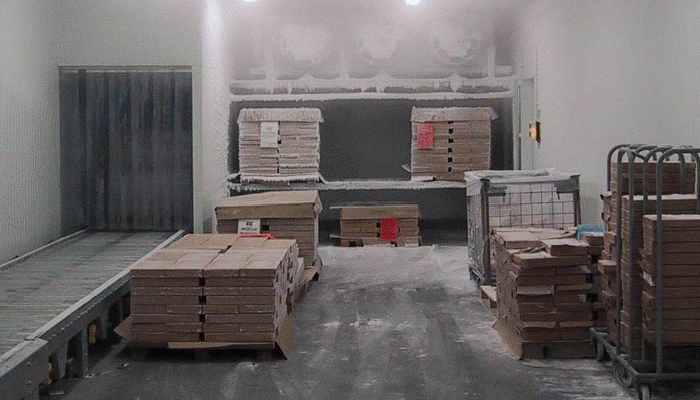
Case Study Style: How an Integrated Upgrade Can Reduce Energy, Alarms and Callouts

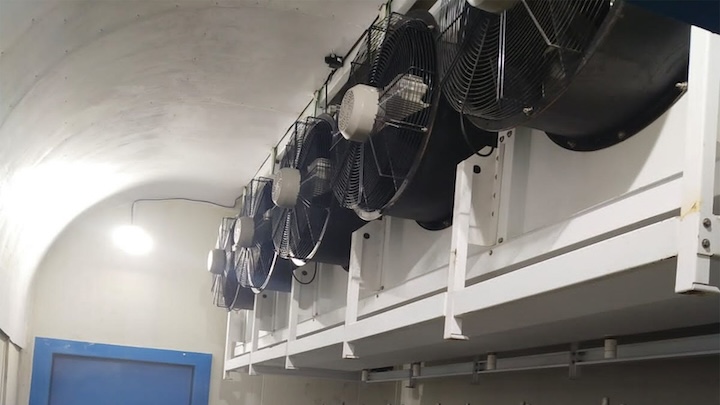
Consider a typical Sydney light industrial facility: several cold rooms, an ageing refrigeration plant, a switchboard that has grown through years of additions, basic controls and a maintenance team that spends too much time responding to alarms. Nothing is completely broken, but the site feels reactive. Energy costs are rising, operators are frustrated by nuisance alerts and management wants a plan that improves reliability without shutting down the business.

Read More
How Integrated Engineering Improves Safety in Industrial Refrigeration Plants

Industrial refrigeration safety is multidisciplinary by nature. Refrigerants can present pressure, toxicity or environmental risks. Electrical systems carry shock, arc and fire hazards. Motors and fans introduce mechanical risk. Controls and interlocks decide how the plant behaves during abnormal conditions. If each risk is managed separately, important connections can be missed.

Read More
The Value of One Handover Pack for Refrigeration, Electrical and Controls

Project handover is often judged by whether the plant is running. That is only part of the story. A facility also needs to know what has been installed, how it was commissioned, which settings were used, what alarms mean, how equipment should be maintained and who to call when something changes. Without clear handover information, the client inherits avoidable uncertainty.

Read More
Avoiding Over-Engineering: Practical Design for Real Industrial Sites

More engineering is not always better engineering. Industrial sites need systems that are safe, reliable, efficient and maintainable. They do not benefit from unnecessary complexity, obscure components, over-complicated controls or designs that look impressive but are difficult to service. Over-engineering can increase cost, slow projects, confuse operators and create avoidable maintenance risk.

Read More
Why Plant Optimisation Requires Refrigeration Data, Electrical Data and Process Data

Optimisation becomes guesswork when data lives in separate places. A refrigeration controller may know pressures and temperatures. An energy meter may know electrical demand. Production records may show throughput and shift timing. Operators may know when doors were open or when product arrived warm. Each source tells part of the story, but none explains the complete plant on its own.

Read More
From Alarm to Action: Building Smarter Plant Response Systems

An alarm is only useful if it leads to the right action. Many industrial facilities have plenty of alarms but not enough clarity. Operators may see repeated messages, unclear codes, nuisance alerts or after-hours notifications that do not explain the risk. Over time, alarm fatigue develops. People begin to acknowledge alarms without investigation, or they escalate every alarm because they cannot tell which ones are critical.

Read More
How Better Electrical Infrastructure Supports Critical Cooling Reliability

Critical cooling depends on electricity. That sounds obvious, yet electrical infrastructure is sometimes treated as background support rather than a central part of refrigeration reliability. A compressor cannot perform if voltage is unstable. A condenser fan cannot run if its contactor fails. A controller cannot alarm remotely if its supply is lost. A generator is not useful if essential loads and changeover logic have not been planned correctly.

Read More
Designing for Food, Pharma and Cold Storage: What Integrated Engineering Looks Like

Food, pharmaceutical and cold storage facilities ask more from engineering than ordinary comfort cooling or general electrical installation. Temperature affects safety, shelf life, compliance and customer trust. Humidity can influence product quality, packaging and hygiene. Alarms need to reach the right people. Data must be reliable enough for audits. Equipment must be cleanable, serviceable and dependable under real production conditions.

Read More
Integrated Fault Finding: Why the Real Problem Is Not Always Refrigeration

When a cold room warms up, refrigeration often gets the blame first. Sometimes that is correct. Other times the real cause is electrical, process-related or hidden in the controls. A fan may not be running because a contactor is failing. A compressor may trip because head pressure is high due to a dirty condenser. A room may ice up because doors are open too long during loading. A sensor may be reading incorrectly. The symptom is temperature, but the cause can be anywhere in the system.

Read More
Heat Recovery: Turning Refrigeration Waste Heat into Process Value

Every refrigeration system moves heat. In many plants, that heat is rejected through condensers and disappears into the atmosphere. At the same time, the same facility may be buying gas or electricity to heat water, warm spaces or support cleaning processes. Heat recovery asks a practical question: can some of that rejected heat be captured and used productively?

Read More
How to Future-Proof Industrial Facilities with Modular Electrical and Refrigeration Design

Industrial facilities rarely stand still. A warehouse adds a freezer room, a production line doubles output, a laboratory changes temperature requirements, a processor adds a new shift, or an owner wants better monitoring after several years of operation. The challenge is that many plants are designed tightly around the first project and leave little room for the next one. Future growth then becomes disruptive, expensive and technically awkward.

Read More
When Refrigeration Becomes a Process Utility

In many industrial sites, refrigeration is not just a cold room service. It is a process utility. Chilled water, glycol, brine, low-temperature air, blast freezing, jacket cooling and humidity control can directly affect throughput, yield, product quality and cleaning schedules. When refrigeration is treated as a utility, the design conversation changes. It becomes less about one piece of equipment and more about how the whole production system receives, uses and manages cooling.

Read More
The Role of Controls in Reliable Refrigeration and Process Plants

Controls are the quiet layer that decide how a plant behaves. They start and stop equipment, interpret sensor values, stage capacity, trigger alarms, protect assets and guide operators. When controls are well designed, the facility feels calm: temperatures are stable, alarms make sense, motors run when required and faults are contained. When controls are poor, even good equipment can seem unreliable.

Read More
Reducing Downtime with Integrated Service Support

Downtime rarely waits for the right specialist to be available. A production line stops, a cold room warms, a pump fails to start or an alarm repeats after hours. The first question is simple: who can understand the whole problem quickly enough to protect the site? In integrated facilities, that answer matters because the fault may not sit neatly within one trade.

Read More
Commissioning Is Where Engineering Becomes Reality

Drawings, calculations and equipment selections are important, but they do not keep product cold by themselves. Commissioning is the stage where engineering meets reality. It is where sensors are proven, motors are rotated, safeties are tested, valves respond, controllers make decisions and the client sees whether the system actually performs as promised. Treating commissioning as a rushed final task is one of the most common ways to weaken an otherwise good project.

Read More
Designing Cold Chain Facilities That Are Easier to Maintain

A cold chain facility can meet temperature on day one and still be difficult to live with. The difference often becomes clear during the first service call. Can the evaporator be accessed safely? Are valves labelled? Is there room to remove a fan motor? Can the electrical panel be isolated without shutting down unrelated equipment? Are drains, heaters and sensors easy to inspect? If the answer is no, maintenance becomes slower, riskier and more expensive than it should be.

Read More
Energy Efficiency Starts with Integration: Refrigeration, Electrical and Automation Working Together

Energy efficiency is often treated as an equipment issue: replace a compressor, install a drive, upgrade a fan or adjust a setpoint. Those actions can help, but the biggest opportunities usually appear when the complete system is reviewed. Refrigeration creates the load, electrical equipment supplies and measures it, and automation determines how the plant responds from minute to minute. If those three disciplines are not aligned, energy waste quietly becomes normal operation.

Read More
PLC and Refrigeration Integration: Smarter Control for Critical Cooling Systems

Refrigeration control has moved well beyond simple thermostats and standalone alarms. Critical cooling systems now interact with PLCs, HMIs, SCADA platforms, remote monitoring, variable speed drives, energy meters and process equipment. When those layers are integrated properly, the plant becomes more visible, more responsive and easier to manage. When they are not, operators are left switching between panels, guessing which alarm matters and waiting for faults to repeat before anyone sees the pattern.

Read More
How Process Requirements Should Drive Refrigeration System Design

A refrigeration system should never be designed only around a room size and a target temperature. Real plants are far more dynamic. Product arrives warm or chilled, operators open doors, washdown adds moisture, forklifts move through traffic paths, production loads vary by day, and quality teams have strict limits to maintain. If these process realities are not understood, the refrigeration plant may be technically correct but operationally frustrating.

Read More
How Electrical Design Impacts Refrigeration Efficiency

Refrigeration efficiency is often discussed in terms of compressors, condensers and evaporators. Those components are important, but they do not operate in a vacuum. They are driven by motors, governed by protection devices, supplied through switchboards, adjusted by controls and influenced by the quality of electrical installation. A refrigeration plant can be well selected and still run inefficiently if the electrical design does not support smooth operation.

Read More
From Concept to Commissioning: The TIESA Approach to Practical Engineering Delivery

Good engineering is not proven in the proposal. It is proven when the plant starts, the product is protected, the operators are comfortable, and the maintenance team knows what to do next. For industrial clients, that journey from idea to reliable operation can be difficult because every stage introduces risk: incomplete site information, changing production requirements, lead-time pressure, trade coordination, commissioning windows and handover documentation.

Read More
One Plant, One System: Why Refrigeration, Power and Controls Must Be Designed Together

A modern industrial plant is not a collection of independent machines. It is an operating ecosystem. Refrigeration removes heat, motors move air and fluid, switchboards distribute power, sensors report conditions, controllers make decisions and people respond to information. If one part is designed in isolation, the whole system can become harder to operate than it needs to be.

Read More
The Hidden Cost of Fragmented Contractors in Industrial Projects

The cheapest project on paper is not always the cheapest project in operation. In industrial work, many of the real costs appear between scopes: a cable pathway not allowed for, a sensor not connected to the correct controller, a refrigeration package that arrives with assumptions about power supply, or an alarm output that nobody has agreed to display on the operator screen. These details may look small during procurement, but they can become expensive during commissioning.

Read More
Why Integrated Refrigeration, Electrical and Process Engineering Delivers Better Plant Outcomes

Walk through any hard-working industrial facility during a production shift and the boundaries between trades disappear very quickly. The product must stay cold, motors must start cleanly, valves must respond, operators need clear alarms, and the whole plant has to recover gracefully when demand changes. A refrigeration issue is rarely only a refrigeration issue once it reaches the floor. It can involve power quality, control logic, sensor placement, airflow, loading practice, safety interlocks and the production schedule.

Read More